Why Does Meditation Make Me Anxious? Relaxation-Induced Anxiety Explained
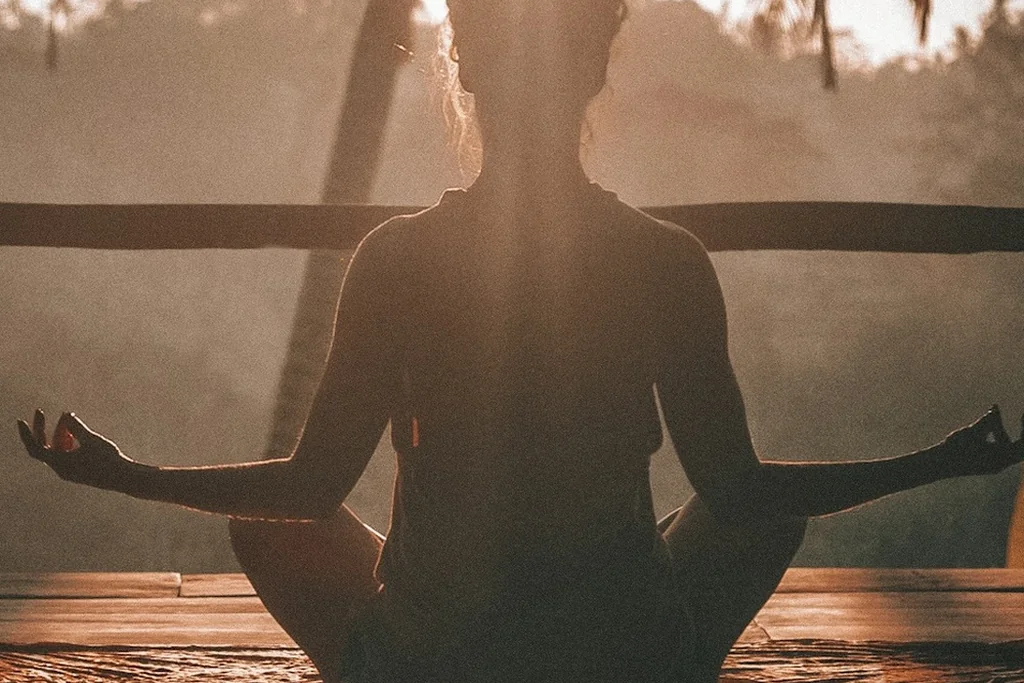
When Closing Your Eyes to Relax Triggers a Sudden Wave of Panic
Quick Answer · Clinical Somatic Reset
Meditation triggers anxiety in up to 25% of beginners due to relaxation-induced anxiety—a defensive reflex where a chronically hypervigilant nervous system interprets sudden muscular softening and closed eyes as vulnerability to danger. Practicing with eyes open, feet grounded, and external anchors prevents this alarm spike.
You sit down to meditate because you want relief from stress. Yet within two minutes of closing your eyes and trying to relax your body, your chest tightens and a wave of dread makes you want to bolt out of the chair. If silent breath-watching triggers panic, switching to open-eye exteroceptive grounding techniques or kinetic multi-sensory anchors prevents relaxation-induced alarm.
The Psychology of Relaxation-Induced Anxiety (RIA) and Contrast Avoidance
Clinical research led by Dr. Michelle Newman (Contrast Avoidance Model) and Dr. Willoughby Britton shows that between 15% and 25% of people experience Relaxation-Induced Anxiety (RIA). When your nervous system has lived in chronic hypervigilance, muscular tension acts as protective body armor.
If you suddenly close your eyes (cutting off visual threat scanning) and tell your muscles to go limp all at once, the amygdala interprets that sudden drop in guard as acute vulnerability. Furthermore, turning attention inward (interoception) magnifies normal heartbeats into perceived panic signals.
The 3-Step Trauma-Informed Exteroceptive Grounding Protocol
Step 1: Keep Eyes Open with 180-Degree Room Orienting (45s)
Do not close your eyes. Keep a soft downward gaze on a pleasant object 5 feet away, then slowly turn your head left and right to let your brainstem visually confirm that the doors, windows, and room are completely safe.
Step 2: Use an External Object Anchor Instead of the Breath (60s)
If watching your breath or heartbeat makes you anxious, anchor your attention 100% outside your body: hold a warm ceramic mug or textured stone in both hands and study its weight, ridges, and temperature.
Step 3: Titrated 20% Muscle Release via Pendulation (45s)
Instead of forcing your whole body to go limp, press your feet firmly into the floor for 5 seconds to feel your strength and agency, then release the tension by only 20% at a time.
Troubleshooting Anxiety During Mindfulness Practice
| Obstacle / Symptom | Neurobiological Cause | Immediate Somatic Adjustment |
|---|---|---|
| Focusing on My Breath Makes Me Feel Like I'm Suffocating | Hyper-monitoring switches breathing from automatic brainstem control to anxious cortical control | Abandon breath-watching immediately; switch to listening to ambient sounds or feeling your feet pressing against the floor. |
| Feeling Floaty, Detached, or Dissociated When Sitting Still | Dorsal vagal freeze response triggered by prolonged immobility | Stand up, walk slowly around the room feeling your heels strike the floor, and splash cool water on your hands. |
| Intrusive Worries Getting Louder in Silence | Sudden removal of daytime distractions unmasking background cognitive loops | Keep gentle background nature sounds playing and limit practice to 2 minutes of open-eye tactile grounding. |
Frequently Asked Questions
What is relaxation-induced anxiety (RIA)?
Relaxation-induced anxiety is a paradoxical spike in heart rate, muscle tension, or panic that occurs when a chronically stressed person attempts deep relaxation, caused by the brain interpreting lowered physical guard as danger.
Should I force myself to push through panic during meditation?
No. Pushing through panic reinforces the conditioned association between stillness and threat. Always open your eyes, move your body, and switch to an external sensory anchor.
What is the difference between interoceptive and exteroceptive meditation?
Interoceptive meditation focuses on internal sensations (breath, heartbeat, gut), whereas exteroceptive meditation focuses on external senses (sight, sound, touch of an object)—which is far safer for anxious beginners.
Is it normal to dislike closing my eyes during mindfulness?
Yes. Closing the eyes removes the brain's primary orienting sense; keeping a soft open gaze at a 45-degree angle toward the floor is a standard traditional practice in Zen (Zazen) and clinical trauma-sensitive mindfulness.