How Mindfulness Helps You Live Life to the Fullest

How Mindfulness Helps You Live Life to the Fullest Every Day
Living life to the fullest sounds like something only the lucky few get to do. However, research consistently shows that mindfulness — not luck — is what separates people who feel truly alive from those who simply go through the motions. Mindfulness is the practice of paying full, non-judgmental attention to the present moment. And when you practice it daily, everything changes.
Eight weeks is the length used by most structured mindfulness courses, and it is roughly how long people take to notice a real difference in their day rather than just in their sitting practice.
What Does It Mean to Live Life to the Fullest?

Living life to the fullest does not mean having a perfect life. It means being fully present for the life you already have.
Most people spend their days on autopilot. They replay past regrets or worry about future problems. As a result, they miss the richness of what is happening right now — a conversation with a friend, the taste of a meal, a quiet morning before work.
Mindfulness interrupts that autopilot. It brings you back to the only moment that is ever truly real: this one.
The Science Behind Full Presence
What is happening underneath is not mysterious. Attention is trainable in the same unglamorous way a muscle is: it gets slightly better at returning to where you put it, every time you notice it has wandered off.
In simple terms, mindfulness rewires your brain to experience life more deeply.
5 Key Benefits of Mindfulness for Living More Fully
Mindfulness offers measurable benefits that directly help you live life to the fullest. Here are five of the most important:
- Over weeks, the background sense of being braced eases. People usually describe it as sleeping better and being less quick to snap, rather than as anything they can measure.
- Stronger emotional regulation. You learn to observe emotions without being overwhelmed by them. Therefore, you react less and respond more thoughtfully.
- Deeper relationships. Present moment awareness helps you truly listen when others speak. People feel seen and valued. Connections naturally deepen.
- Greater appreciation for small moments. Mindfulness trains you to notice beauty in ordinary experiences — a warm cup of tea, sunlight through a window, a child’s laughter.
- Improved focus and productivity. When you stop multitasking and give full attention to one thing at a time, you do it better and feel more satisfied.
Pros and Cons of a Daily Mindfulness Practice
Pros:
- Easy to start with no equipment needed
- Backed by decades of clinical research
- Reduces symptoms of anxiety, depression, and chronic pain
- Improves sleep quality
- Accessible to all ages, including children
Cons:
- Requires consistent daily practice to see lasting results
- Can feel frustrating at first when the mind wanders
- Some people need guided support to build the habit
The benefits, however, far outweigh the challenges. Most people notice a meaningful shift within two to four weeks of daily practice.
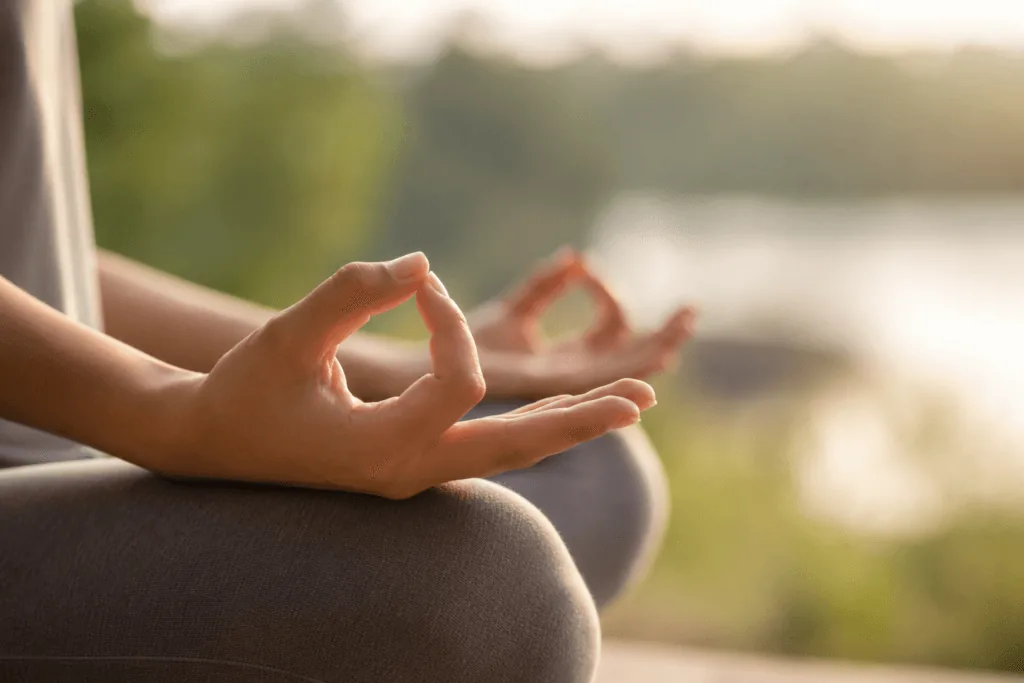
How Present Moment Awareness Transforms Daily Life
Present moment awareness is the core skill that mindfulness builds. It sounds simple, yet it is genuinely transformative.
Think about the last time you drove somewhere familiar and arrived with no memory of the journey. Your body was there, but your mind was elsewhere. That is the opposite of present moment awareness.
When you cultivate presence, you stop sleepwalking through your days. Instead, you notice the texture of experiences.
A Real-World Example
Attention shapes experience more than most of us assume. The same commute, the same meeting, the same evening can be a blur or a lived hour depending only on whether anyone was home for it.
Her conclusion: the mind and body are not separate. Where your attention goes, your experience follows.
6 Practical Mindfulness Strategies You Can Start Today
You do not need to sit on a cushion for an hour to practice mindfulness. Additionally, you do not need to clear your schedule. Here are six strategies that fit into any day:
1. The Three-Breath Reset
Before any activity — answering an email, eating lunch, starting a meeting — pause and take three slow, deliberate breaths. This activates your parasympathetic nervous system and brings you into the present moment within seconds.
2. Mindful Morning Routine
Instead of reaching for your phone first thing, spend five minutes in quiet awareness. Notice how your body feels. Listen to sounds around you. This sets a calm, present tone for the entire day.
3. Single-Tasking
Multitasking is the clearest everyday example. Doing two things at once reliably produces two worse results and a tireder person, which most of us know from experience and ignore anyway.
4. The Body Scan
Once daily, spend five minutes mentally scanning your body from head to toe. Notice areas of tension without judgment. This simple practice builds present moment awareness and releases stored stress.
5. Mindful Eating
At one meal each day, eat without screens or distractions. Chew slowly. Notice flavors, textures, and aromas. This practice reconnects you to the sensory pleasure of food — and often reduces overeating as a bonus.
6. Evening Gratitude Check-In
Before bed, mentally note three specific things from your day that you genuinely appreciated. This trains your brain to scan for positive experiences, which compounds over time into a more fulfilling life.
What Mindfulness Experts Say About Living Fully
Mindfulness, in the sense used here, simply means paying attention to what is happening now, on purpose, without immediately grading it. That is the whole definition, and it is deliberately undramatic.
“The full catastrophe of life includes both its beauty and its pain. Mindfulness doesn’t remove the difficulty — it changes your relationship to it.”
In practice, this means that living life to the fullest is not about eliminating hardship. It is about meeting every experience — pleasant or painful — with open, present awareness. As a result, nothing is wasted. Every moment becomes part of a rich, examined life.
Additionally, Tara Brach, a clinical psychologist and meditation teacher, emphasizes that most people live in what she calls a “trance of unworthiness” — a constant low-grade sense that something is wrong or missing. Mindfulness dissolves that trance. It reveals that wholeness was available all along.
Mindfulness for Children: Teaching Full Presence Early
Adults are not the only ones who benefit. Children who learn present moment awareness early develop stronger emotional regulation, better attention spans, and greater resilience.
Simple practices for kids include:
- Starfish breathing: Trace each finger slowly while breathing in and out
- Mindful listening: Sit quietly and count how many sounds they can hear
- Feelings check-in: Ask “What does this feeling feel like in your body?” rather than just “How do you feel?”
When families practice mindfulness together, they also model what it looks like to live life to the fullest — to show up fully for one another.

Mindfulness Is the Path to a Fuller Life
Living life to the fullest is not a destination you eventually reach. It is something you choose, moment by moment, through the quality of your attention.
Mindfulness gives you the tools to make that choice. It reduces the noise of anxiety and regret. It sharpens your appreciation for what is already here. And it deepens every relationship, experience, and quiet moment that might otherwise pass unnoticed.
You do not need more time, money, or luck to live a fuller life. You need presence. And that is something you can begin practicing today.
Start with three breaths. That is enough.
What Gets Hard, and What to Do About It
"Living fully" sounds like it requires a bigger life
It is the phrase that does the damage. It suggests travel, novelty and a permanently interesting existence, when in practice almost all of anyone's life is ordinary and repeated. Mindfulness does not make the ordinary parts more eventful. It makes them attended to, which is the only version of "fully" actually on offer.
You forget for entire days
Everyone does. Attach the practice to something physically unavoidable — the kettle, the front door, the seatbelt — rather than to a good intention, which a busy week erases completely. Remembering at eleven at night that you meant to be present is itself a moment of presence.
It feels boring
Correct, and worth sitting with rather than solving. What changes is not how interesting the washing up is but your tolerance for being somewhere without stimulation — and that tolerance turns out to underpin most of your patience with everything else.
You become more irritable, not less
A real and under-discussed effect. Paying attention means noticing things you had been driving past: how tired you are, how much you dislike a particular meeting, how often you interrupt people. It usually settles within a few weeks, and on the other side there are commonly one or two decisions you had been avoiding.
You keep grading how you are doing
The most common trap and a faintly comic one — marking yourself on your non-judgement. Name it and move on. Self-compassion is the direct antidote, and the two practices strengthen each other more than any other pair.
Something painful is happening right now
Then closer attention initially means feeling more, not less, and this is where people abandon the practice concluding it does not work. Shrink it instead: shorter, gentler, more physical anchors — feet on the floor, hands in warm water, the weight of a mug — rather than open awareness of whatever is present.
Where to Put It in an Ordinary Day
Three anchors that cost no additional time, because they attach to minutes you are already spending.
The doorway. One breath as you cross any threshold, noticing that you are arriving somewhere. This changes how you show up to other people more than any other single practice, and it is invisible.
The first sip. One mouthful of your first drink, attended to properly. Not the whole drink — one sip is a promise you will keep, and a mindful breakfast is not.
Listening without preparing. In one conversation a day, listen without composing your reply while the other person is still talking. Much harder than it sounds, and the one other people notice.
Pick one, hold it for two weeks, and only then consider a second. The full set is in mindful living.
What to Expect, Month by Month
Weeks one and two: you remember the anchor twice a day and forget it at weekends. That is the expected rate, not a poor start.
Weeks three and four: it fires without you deciding, and you start catching yourself on autopilot at random moments. That is the skill generalising.
Months two and three: the irritable phase for many people, then a settling, and usually a small decision or two about what you say yes to.
Beyond: days feel slightly longer in the good sense. Not calmer necessarily — more attended to, and more yours. Which is what "living fully" turns out to mean once the phrase is taken down to size.
Not a bigger or more eventful life. Almost all of anyone's life is ordinary and repeated, and mindfulness does not change that — it changes whether those hours are attended to or skipped. "Fully" means present for what is already happening rather than adding more to it.
Use anchors attached to minutes you already spend: one breath as you cross a doorway, the first sip of a drink, or listening in one conversation without composing your reply. None of them costs extra time, which is exactly why they survive a busy week.
Because you are noticing things you previously drove past — fatigue, friction, habits you had stopped seeing. This phase is common, usually settles within a few weeks, and often resolves once you make one or two decisions you had been avoiding.
No. Daily anchors work on their own. A short sitting practice makes it easier because it trains the same skill in concentrated form, but plenty of people build a solid mindful-living habit without ever sitting on a cushion.
That is expected — attention removes the distance you were maintaining, which is how things get processed rather than stored. Shrink the practice rather than stopping: shorter, more physical anchors like feet on the floor or the weight of a mug, instead of open awareness.
Frequently Asked Questions
What does it mean to live life to the fullest through mindfulness?
Living life to the fullest through mindfulness means being fully present in each moment rather than mentally dwelling in the past or future. Mindfulness trains your attention so that you experience your life deeply — noticing small joys, engaging fully in relationships, and appreciating what is already here. It is not about having more experiences. It is about being more present for the ones you already have.
How long does it take for mindfulness to make a difference?
Most people notice something shift somewhere between two and four weeks of daily practice — usually first in how quickly they recover from an irritation rather than in how calm they feel.
Can mindfulness help with anxiety and stress?
It slows the body down, breaks the loop of anxious thinking, and gives you somewhere to put your attention that is not the thought you are stuck on.
How does present moment awareness improve daily life?
Present moment awareness reduces mental clutter, improves focus, and deepens your enjoyment of everyday experiences. When you stop running on autopilot, you notice beauty in ordinary moments. Additionally, you respond to challenges more calmly instead of reacting impulsively. Over time, this creates a life that feels richer, more intentional, and more satisfying.
Is mindfulness suitable for beginners with no experience?
Absolutely. Mindfulness requires no special equipment, training, or background. Beginners can start with something as simple as three conscious breaths before a meal or a five-minute body scan before bed. Therefore, there is no barrier to entry. Many apps, books, and free online resources also offer guided mindfulness exercises designed specifically for those just starting out.
Keep reading

Mindful Living: How to Actually Do It on a Busy Day
Seven anchors that attach to a day you already have, and why "just be present" fails as an instruction.

Complete Guide to Focus Meditation
In a world of constant distractions, where notifications pull us in a dozen different directions before breakfast,…
How Long Should You Meditate?
Most people quit meditation over a number. Five minutes every day beats twenty minutes twice a week — here is how to pick a length you will actually keep…