How Long Should You Meditate?
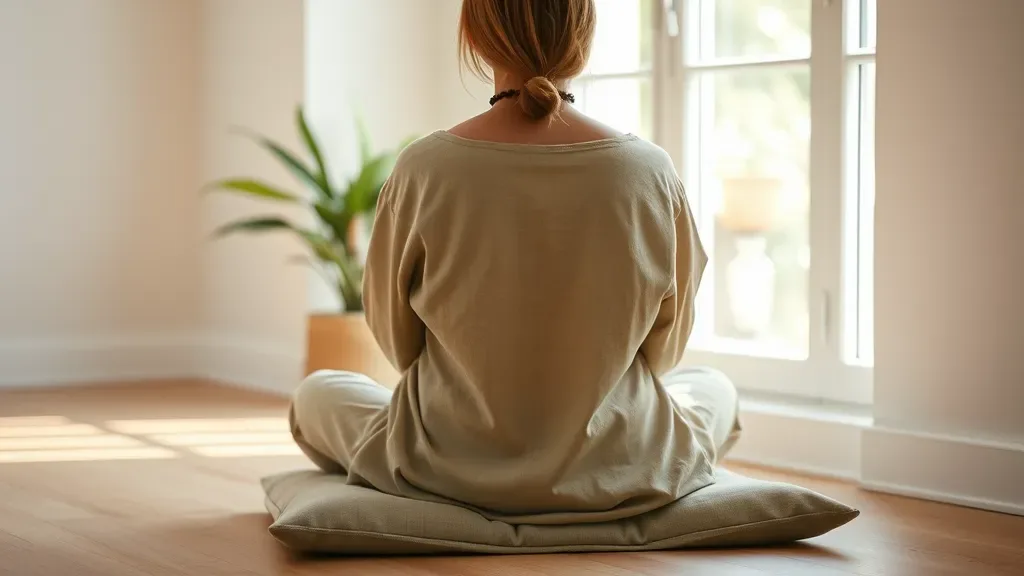
Most people quit meditation over a number. They read somewhere that twenty minutes is the real dose, sit down with good intentions on a Monday, last about nine minutes, skip Thursday, and quietly conclude the practice is not for them.
The number was the problem. Not them.
How long you should meditate is a fair question with a real answer, but it is not one number and it changes depending on where you are standing. Here is the honest version, including what to do when the timer starts to feel like a punishment.
The short version
- Five minutes every day beats twenty minutes twice a week. Frequency builds the habit, duration deepens it, and in that order.
- If you are starting out, sit for five minutes. You can always add time later. You cannot easily rebuild a habit you have already abandoned.
- Ten to twenty minutes daily is where most long-term practitioners settle. There is nothing magic waiting above that for most people.
- When a session feels too long, shorten it rather than skip it. Two minutes still counts. Zero minutes is how practices die.
How Long Should You Meditate?
Start with five minutes a day. After two consistent weeks, move to ten. Most people settle between ten and twenty minutes daily, and that is genuinely enough to change how you handle a difficult afternoon. The length matters far less than showing up most days, for months.
That is the whole answer. Everything below is about making it survive contact with a real week.
Why the Number Matters Less Than You Think
Meditation is a skill, and skills are built by repetition, not by intensity. Nobody learns an instrument by practising three hours once a fortnight. You learn it in short, frequent, slightly boring sessions that add up without ever feeling dramatic.
Attention works the same way. What you are training is a very specific move: noticing that your mind has wandered, and coming back without making it a whole event. That move is the entire practice.
A five-minute sit might give you eight or nine chances to make it. A twenty-minute sit gives you more, but only if you are actually there for twenty minutes rather than counting down the last twelve.
This is why I would rather someone sit for four minutes daily for a month than for thirty minutes on the two days they feel motivated. The short version compounds. The long version stays a good intention.
How to Choose Your Number: Five Steps
Pick your length deliberately rather than aspirationally. This takes about a minute.
- Take the longest you believe you could sit, and halve it. Whatever you first thought of was your ambition talking. Halving it gets you closer to what you will still be doing in three weeks.
- Set a timer, and let it be the authority. Do not meditate until you feel calm. Feeling calm is not the goal and chasing it turns a practice into a test you can fail. The timer ends the session. Nothing else.
- Attach it to something you already do without thinking. After you brush your teeth. Before you open your laptop. The moment you sit in a parked car before going inside. A practice with no fixed slot in the day gets negotiated away.
- Hold that length for two full weeks without changing it. Resist the urge to extend on the days it goes well. Consistency is the thing you are building right now, not depth.
- Add five minutes only after the current length has felt easy twice in a row. Not once. Twice. One good session is a mood, two is a signal.
How Long to Meditate, by Where You Actually Are
| Where you are | Session length | How often |
|---|---|---|
| Never meditated, or physically restless | 3 to 5 minutes | Every day |
| First month of practising | 5 to 10 minutes | Every day |
| Sitting still no longer feels like effort | 10 to 15 minutes | Every day |
| Established practice, months in | 15 to 25 minutes | Every day, or six days |
| Coming back after a break | Back to 5 minutes | Every day |
That last row is the one people ignore. After a gap of a few weeks, most of us try to restart at the length we finished on, find it unpleasant, and stop again. Restarting small is not going backwards. It is the only restart that tends to hold.
Duration or Frequency: Which One to Protect
If a week goes badly and you can only protect one of them, protect frequency.
A two-minute sit on a chaotic day does something a skipped day cannot: it keeps the practice a thing you do. The identity survives, and identity is what carries you through the weeks where motivation has clearly left the building.
A useful rule: missing one day is nothing. Missing two is a wobble. Missing three in a row is how a practice quietly ends, and it is worth treating the third day as non-negotiable even if the session is ninety seconds long.
What Gets Hard, and What to Do About It
Nobody warns beginners about these, and every one of them is normal.
The session feels endless
Almost always a sign the length is wrong for you right now, not that you are bad at this. Drop by half tomorrow. A five-minute sit you complete calmly teaches you more than a fifteen-minute sit you endure.
You keep checking the timer
Put the phone face down and out of reach before you start. If you are checking, the mind has found a legitimate-looking escape route. Closing it off is usually enough.
You fall asleep
Sit up rather than lie down, open your eyes slightly with a soft gaze at the floor, and move the session earlier in the day. Falling asleep is not failure, it usually just means you are tired. If it happens in the evening, that is arguably the practice working.
You get bored
Boredom is not a sign to stop, it is usually the first genuinely interesting thing to happen. Sitting with restlessness without immediately fixing it is a large part of what you came for. Try naming it silently once, and staying.
If it persists for weeks, change the object rather than the length. Move from following the breath to a body scan, or to a simple breathing exercise with a counted rhythm.
You miss days
Return the same day if you can, at half the length. Do not add time to make up for a gap. There is nothing to repay, and treating it as a debt is exactly what turns a missed Tuesday into a finished practice.
You feel worse, not calmer
Sitting quietly can bring difficult material closer to the surface, particularly around grief, anxiety or old wounds. If that happens, shorten the session, keep your eyes open, and consider an anchored practice such as the STOP technique rather than long silent sitting.
It is entirely fine to stop a session early. And if the difficulty is persistent or heavy, meditation is not a substitute for talking to a professional. Please treat that as the sensible next step rather than a failure of practice.
What to Expect, Week by Week
Realistic timelines, so you know whether anything is going wrong.
Week one. Mostly awkward. You will wonder whether you are doing it correctly, and the answer is that noticing you have wandered is doing it correctly. Expect no obvious benefit, and do not read that as evidence of anything.
Week two. Sitting down gets easier than it was. The sessions themselves may feel no different. This is the point where most people quit, precisely because nothing has visibly happened yet.
Month one. The first transfer usually shows up here, and rarely during a session. You catch yourself mid-reaction — about to fire off a reply, about to snap — and there is a small gap that was not there before. That gap is the whole point.
Month three. Sitting has become ordinary rather than an achievement. Ten or fifteen minutes no longer feels like a negotiation. Most people naturally lengthen around here without deciding to.
If you want to build the habit around an anchor point in your day, an evening meditation tends to stick more easily than a morning one for people who are not naturally early risers.
Does the Time of Day Change How Long You Should Sit?
Not the length, but it changes how the length feels, which amounts to the same thing in practice.
Morning sits tend to feel shorter. The mind has not yet accumulated the day, there is less to unpack, and five minutes passes without much protest. This is why morning is the usual recommendation, and why it works well for people who are already awake and functional before their first coffee.
Evening sits tend to feel longer, because you arrive carrying everything that happened. The same ten minutes can feel like twenty. If you meditate at night, it is reasonable to sit slightly shorter than your usual length rather than forcing the number.
Midday sits are the most underrated and the least practised. Three minutes in a parked car between two obligations will do more for a stressful day than fifteen minutes that evening once the damage is done.
Pick the slot you can defend, not the one that sounds most disciplined. A defended five minutes beats an idealised twenty.
How Long to Meditate for a Specific Goal
The right length shifts a little depending on what you came for.
For falling asleep
Ten to twenty minutes, lying down, with no timer. This is the one case where the usual rules invert. You are not training attention here, you are giving the body permission to slow down, and falling asleep partway through is a successful session rather than a failed one. A slow body scan works better than breath-focus for this, because it gives the mind something long and undemanding to travel through.
For anxiety in the moment
Sixty seconds to three minutes, eyes open. When the nervous system is already lit up, long silent sitting often makes things louder rather than quieter. Short, structured and sensory is what helps: a few lengthened out-breaths, or a quick grounding sequence. Save the longer sits for calmer days, when you are building capacity rather than spending it.
For focus before work
Five to ten minutes, immediately before the task rather than at some earlier point in the morning. The steadying effect of a sit fades over a few hours, so proximity matters more than length. Ten minutes at 8am does noticeably less for a 2pm meeting than three minutes at 1.55pm.
For general stress, over months
Ten to twenty minutes daily, and patience. This is the goal that genuinely rewards duration, but only once the habit is stable. Getting to ten minutes daily and staying there for three months will do more than any amount of ambitious sitting in week one.
Frequently Asked Questions
Yes, especially at the start. Five minutes daily is enough to build the habit and to begin training attention. It is far more effective than twenty minutes attempted occasionally. Treat five minutes as a real practice rather than a placeholder, and lengthen it only once it feels genuinely easy.
More often. Frequency builds the habit and gives you repeated practice at returning your attention, which is the skill itself. Duration deepens a practice that already exists. If you have to choose in a busy week, protect the daily session and let it be short.
Three to five minutes daily for the first two weeks, then five to ten minutes for the first month. Beginners consistently overestimate what they can sustain. Starting shorter than feels ambitious is the single most reliable way to still be practising in three months.
For everyday practice, sessions beyond about thirty minutes offer diminishing returns for most people and can make the habit feel burdensome. Long sits also bring difficult material closer to the surface. If a session leaves you agitated rather than settled, shorten it.
Sitting down usually feels easier within about two weeks. The first noticeable change outside practice tends to arrive around a month in, and shows up as a small pause before reacting rather than as a feeling of calm. Consistency matters more than session length.
Start Shorter Than You Think You Should
If you take one thing from this: choose a length you would still be willing to do on your worst day of the month. That is your number.
It will feel almost embarrassingly small. That is the point. Small is what survives a bad week, and surviving bad weeks is the entire game.
Set a timer for five minutes today. If you would like something structured to follow rather than sitting in silence, start with a focus meditation, or browse the rest of our meditation for beginners guides.
Keep reading
Breathing Exercises for Anxiety: 6 Techniques That Work
Six techniques, when to use each one, and the common mistake that makes people feel worse instead of calmer.
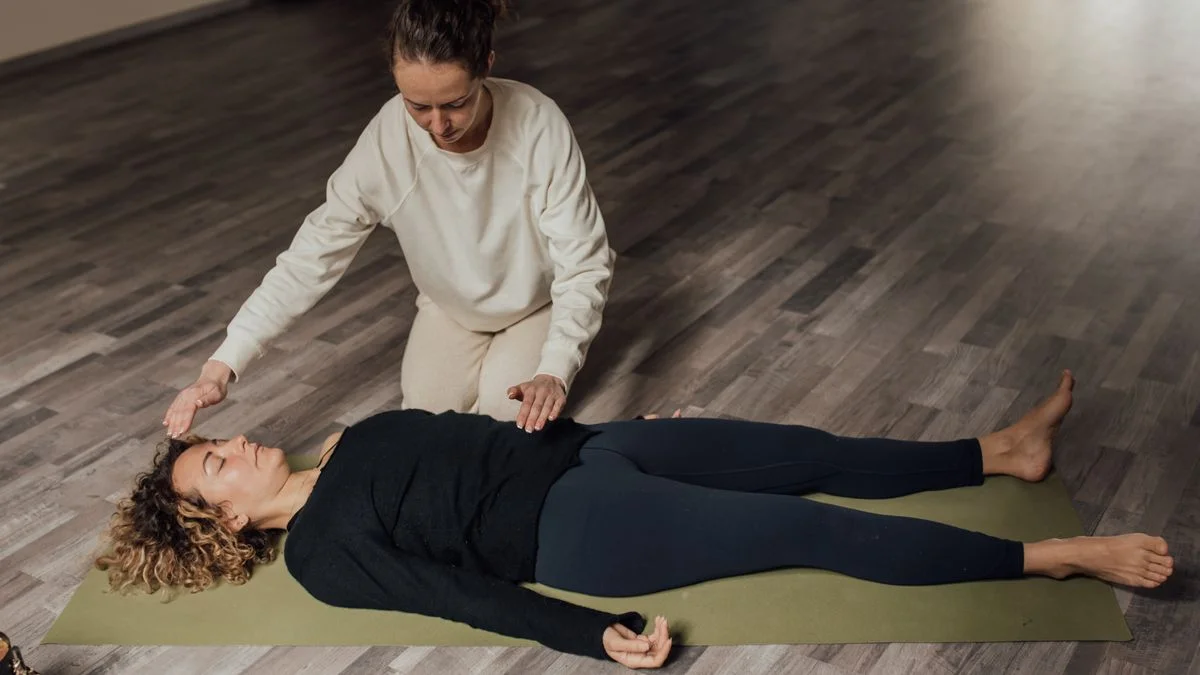
Body Scan Meditation for Sleep: A Step-by-Step Guide
The full sequence, feet-to-head versus head-to-feet, how long it should take, and why falling asleep halfway through is fine.

Self-Compassion: How to Stop Being So Hard on Yourself
Seven practices, why the fear that it will make you lazy is backwards, and what to do when you actually did something wrong.