Mindfulness for Kids: 7 Practices That Actually Work
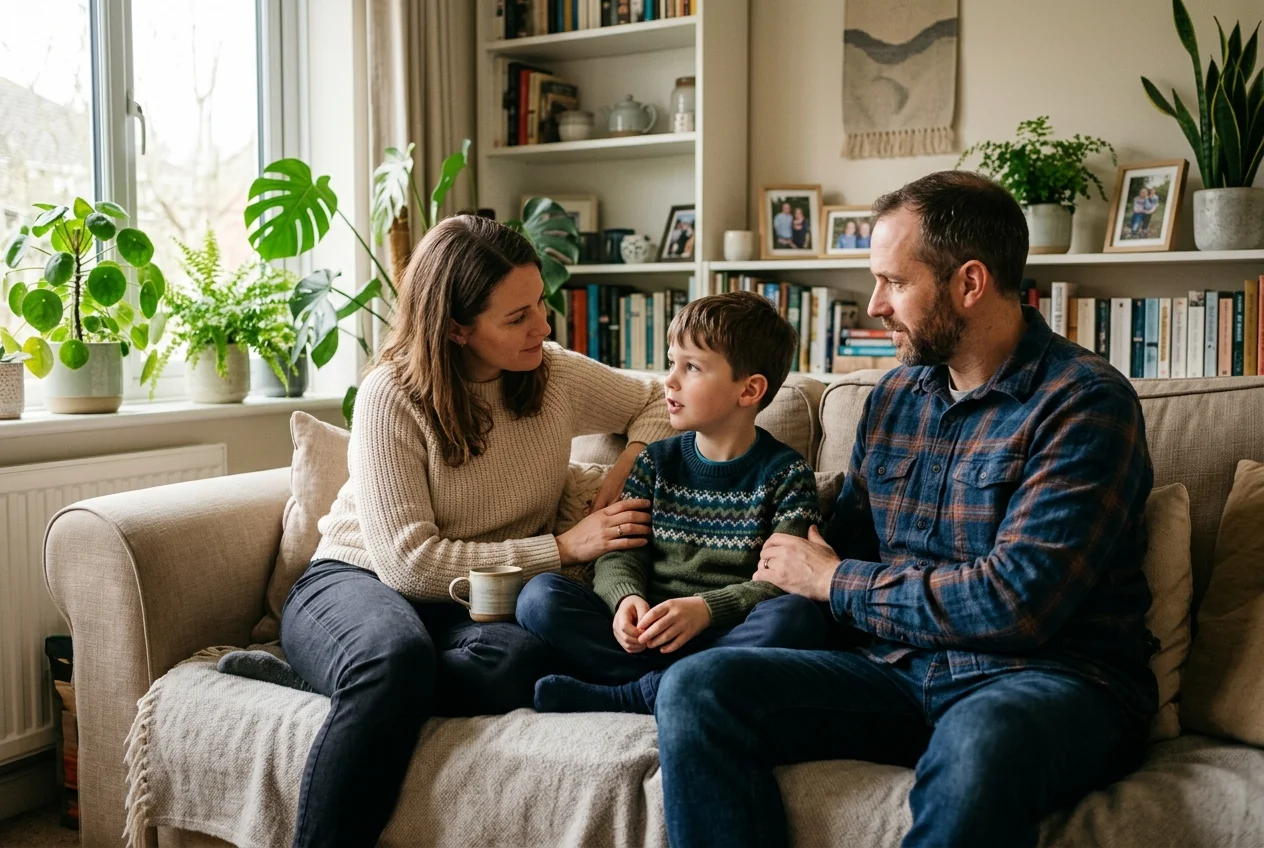
Ask a seven-year-old to sit still and notice their breath and you will get about four seconds, a comment about their sock, and a request for a snack. This is not a failure of the child or of mindfulness. It is a failure of the instruction.
Children can absolutely do this. They tend to be better at it than adults, in fact — they have far less resistance to paying attention to something ordinary, because ordinary things are still reasonably interesting to them. What they cannot do is follow adult instructions delivered in adult language and adult lengths.
There is also one thing that matters more than every technique in this article combined, and most parenting advice mentions it only in passing. It is coming up after the practices, and if you only take one thing away, take that.
Key takeaways
- Roughly one minute per year of age is the realistic ceiling for a child's practice.
- Teach it when everything is calm. A tool introduced mid-meltdown becomes part of the meltdown.
- Make it physical and visual — hands, objects, movement — rather than internal and verbal.
- Never use it as a punishment or a way to make a child stop having feelings.
- Your own regulation does more for your child than any technique you teach them.
What Does Mindfulness for Kids Actually Mean?
Mindfulness for children means short, playful, sensory activities that build the ability to notice what is happening — in their body, their feelings and their surroundings — rather than being swept along by it. It is not sitting still, being quiet, or calming down on command, and framing it that way is why most attempts fail.
The skill being built is the pause. A child who can notice my tummy feels wobbly before the shouting starts has something enormously useful, and it is the same capacity adults spend years developing. Children acquire it faster, mostly because they have not yet learned to be embarrassed about paying attention to their own bodies.
What it is not: a compliance tool. If mindfulness becomes the thing that happens when an adult wants a child to be quieter, it will be resisted like any other instruction — and it will teach the child that their feelings are inconvenient, which is roughly the opposite of the goal.
What Works at Which Age
| Age | Realistic length | What works |
|---|---|---|
| 3-4 | 30-60 seconds | Watching an adult; blowing bubbles or a pinwheel |
| 5-6 | 1-2 minutes | Hand breathing, soft toy on the tummy, listening games |
| 7-9 | 3-5 minutes | Five senses games, weather report, mindful eating |
| 10-12 | 5-8 minutes | Body scan, naming feelings, short sitting practice |
| Teenagers | 5-10 minutes | Anything private and not called mindfulness |
The rough rule is a minute per year of age, and stopping while they still want more. A practice that ends slightly too early gets asked for again; one that runs until they are bored becomes something they avoid.
Seven Practices Children Actually Do
1. Hand flower
Fingertips together, opening slowly like a flower on the in-breath, closing more slowly on the out. Costs nothing, travels everywhere, and works from about four upward. It is also usable at school without anyone noticing, which matters enormously to children over eight.
2. Soft toy on the tummy
Lying down with a small toy on their stomach, watching it rise and fall. The best introduction for under-sevens because the instruction is visual rather than internal — you are asking them to watch something move, not to notice a sensation.
3. The breathing ball
An expanding sphere that opens and closes with the breath. It removes counting entirely, which is why it works when a child is already upset and cannot follow instructions. We have a full guide to the breathing ball including what to do when they refuse to use it.
4. Five senses game
Five things you can see, four you can hear, three you can touch — done as a game rather than a technique. Turn it into a competition or a scavenger hunt and it works in a car, a waiting room or a supermarket queue. The adult version is the 5-4-3-2-1 grounding technique.
5. Listening for the furthest sound
Everyone closes their eyes and finds the most distant sound they can hear. Thirty seconds. Children are genuinely good at this and often better than the adults, which is a large part of why they enjoy it.
6. The weather report
"What's the weather inside you right now?" Sunny, stormy, foggy, a bit drizzly. This gives children a vocabulary for internal states without requiring emotional language they do not yet have, and it works with children who go blank when asked how they feel.
7. One bite, slowly
A raisin, a square of chocolate, a segment of orange — eaten slowly, with attention on taste and texture. The classic introductory mindfulness exercise, and children take to it far more readily than adults because it involves food and no philosophy.
The Thing That Matters Most
Here is what was promised at the start, and it is uncomfortable rather than complicated.
Your child's ability to regulate their emotions is shaped far more by how you handle yours than by any exercise you teach them. Children borrow calm from the adults around them long before they can generate their own — a settled adult in the room is doing more regulating than any breathing technique.
Which means the highest-value practice available is your own. Not to be a calm parent at all times, which nobody manages, but to have a few seconds between a child's behaviour and your reaction. That gap is where the useful version of parenting lives, and it is trainable — five minutes a day of ordinary practice does more for it than any amount of reading.
The second half of that: let them see you use it. Saying out loud "I'm getting cross, I'm going to take three breaths" teaches more than a hundred instructions. Children learn regulation by watching it, and watching an adult do it imperfectly and out loud is considerably more instructive than watching one appear never to need it. If your own fuse is short, meditation for anger management is the practical starting point.
What Gets Hard, and What to Do About It
They refuse when they are upset
Because it was introduced while they were upset. Teach it only when everything is calm, as a game, several times over a fortnight. It must be familiar and slightly boring before it can be useful in a difficult moment — and even then, expect them to refuse sometimes.
They say it is boring
Then it is too long or too still. Cut it in half, add movement or an object, and stop before they want to. Boredom in a child is almost always a sign of the wrong dose rather than the wrong activity.
It works for a week then stops
Novelty was doing the work. Rotate practices, put one away for a fortnight, or move it to a fixed slot — after school, before bed — so it becomes routine rather than event.
Your teenager is not interested
Almost guaranteed if it is presented as mindfulness by a parent. Leave the information available and stop selling it. Teenagers often adopt these things privately and would rather not discuss it, which is a perfectly acceptable outcome.
You find yourself using it to make them stop
Worth watching for, because it happens gradually and it undoes the whole thing. "Go and do your breathing" said in frustration is a punishment, and it teaches that big feelings are unwelcome. Offer to do it with them instead, and accept no for an answer.
Your child has real anxiety
Mindfulness games are a support, not a treatment. If your child is avoiding school, having panic attacks, struggling to sleep for weeks, or their worry is interfering with ordinary life, speak to your GP or their school. Childhood anxiety responds well to proper treatment, and these practices work best alongside it.
What to Expect
First fortnight: it is a game and nothing more. That is exactly right — you are building a pleasant association, not a skill.
Weeks three and four: they will do it when calm and prompted. Unimpressive to watch and the real milestone.
Months two and three: some children start using it themselves when upset. Many will not, and those children are still absorbing what they have watched you do.
Long term: what you are really giving them is the idea that feelings can be noticed rather than only acted on. That outlasts every specific technique, and most of them will not remember where it came from.
From about three, in very short playful forms — blowing bubbles, watching a soft toy rise and fall on their tummy. A useful rule is roughly one minute per year of age, so a five-year-old manages a minute or two and a ten-year-old five to eight minutes.
Stop asking them to sit still. Use physical and visual activities instead — hand breathing, a breathing ball, listening for the furthest sound, eating one raisin slowly. Sitting quietly is not the skill; noticing is, and it can be built entirely through movement and games.
Usually because it was first introduced during a meltdown, which makes it part of the meltdown. Teach it only when everything is calm, as a game, repeatedly over a couple of weeks. Once it is familiar and slightly boring it becomes available in a hard moment.
It helps as a support, giving children a way to notice what is happening before it overwhelms them. It is not a treatment. If a child is avoiding school, having panic attacks or their worry is interfering with daily life, speak to your GP or their school — childhood anxiety responds well to proper treatment.
Your own regulation. Children borrow calm from the adults around them long before they can generate their own, so a settled adult in the room does more than any technique. Letting them watch you use it out loud — "I'm getting cross, I'm taking three breaths" — teaches more than instructing them.
When in the Day to Do It
Timing decides whether this becomes a habit or a thing you tried in March. Four slots work reliably, and they work because something already happens there.
The school pickup transition. The first ten minutes after school are frequently the worst of the day — children hold themselves together all day and release it the moment they reach a safe adult. A one-minute game in the car, before any questions about their day, changes that stretch more than anything else on this list.
Before homework. Two minutes of hand breathing marks a boundary between one mode and another, and children accept the transition more readily when it is marked physically rather than announced.
Bedtime. The most natural slot and the one most families land on. A soft toy on the tummy, or a short slow scan from toes upward. Do not aim for sleep — aiming for sleep turns it into a task with a pass mark, and children detect that immediately.
In the queue. Waiting rooms, supermarket queues, traffic. This is where the five senses game earns its place, and it converts the most reliably irritating minutes of family life into something mildly useful.
Pick one. Not four. A single slot that survives a difficult month is worth considerably more than a full programme that lasts nine days.
Giving Feelings a Name
The most valuable long-term thing on this page, and it is not a breathing exercise.
Children who can name what they are feeling are noticeably less overwhelmed by it, and most children have a working vocabulary of about three feelings: happy, sad and angry. Everything else — disappointed, embarrassed, left out, nervous, frustrated, jealous — arrives as one of those three, usually as anger, because anger is the loudest and easiest to reach.
Widening that vocabulary is straightforward and does not require a sit-down conversation. Narrate your own out loud in ordinary moments: I'm frustrated because I've lost my keys again. I felt a bit left out when they went without me. Children pick up emotional vocabulary the same way they pick up any other — by hearing it used correctly by someone they are around.
Then, when they are upset, offer a guess rather than a question. "How do you feel?" produces "fine" or a shrug. "You seem disappointed — is that it?" gives them a word to accept or correct, and children correct adults with great enthusiasm. Either answer is a win.
One caution worth keeping: naming a feeling is not the same as making it go away, and a child who senses that the naming is a technique for ending the feeling will stop cooperating. Sit with the named feeling for a moment before moving on. The same principle applies to adults, and it is covered in what happens when you bottle up emotions.
Start With One Game, Once
Not a routine, not a chart on the fridge. Today, when nothing is wrong, ask your child to close their eyes and find the furthest sound they can hear. Thirty seconds. Then be impressed by their answer and stop.
Do that a few times over the next fortnight, when everyone is calm and nobody needs it, and you will have built something available on the day somebody does.
Keep reading

How to Stop Focusing on Your Breathing During Meditation
How to Stop Focusing on Your Breathing During Meditation Knowing how to stop focusing on your breathing is one…

Pixel Thoughts: Let Go of Negative Thoughts With Mindfulness
Pixel Thoughts: How to Let Go of Negative Thoughts and Calm Anxiety Pixel thoughts is a mindfulness-based visualization…
STOP Method: The Mindfulness Technique That Resets Your Mind
The STOP method is a four-step mindfulness intervention designed to interrupt automatic stress responses and return you…