Somatic Orienting for Hypervigilance: Resetting Your Brainstem Threat Scanner
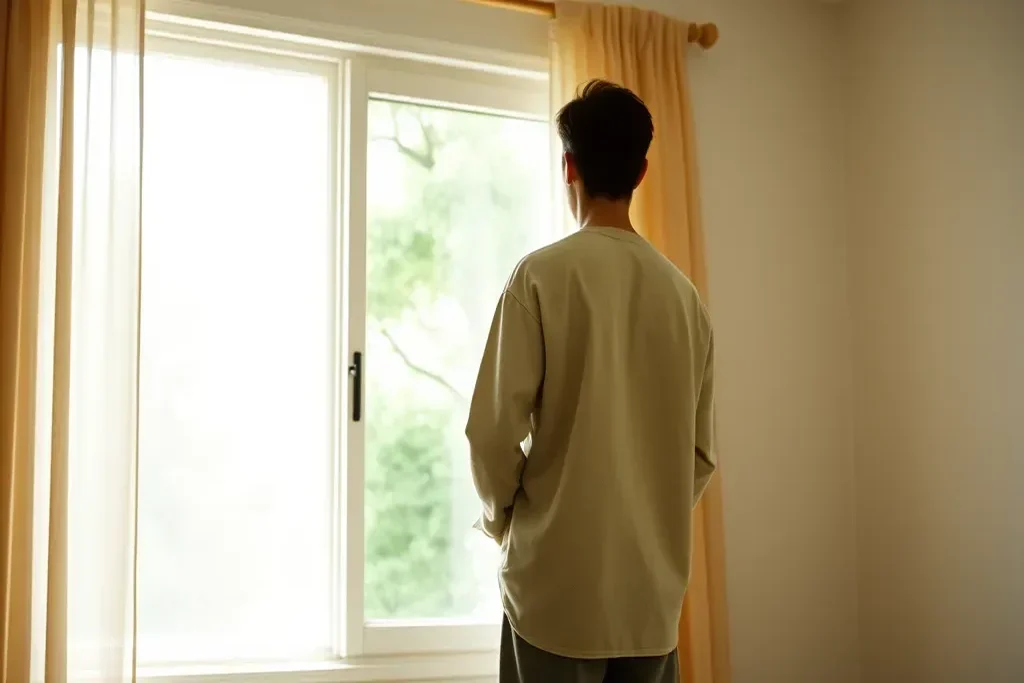
Why Closing Your Eyes Can Heighten Hypervigilance
Quick Answer · Clinical Somatic Reset
Somatic orienting is a trauma-informed nervous system reset where you slowly turn your head and neck to let your eyes land naturally on neutral objects in your environment. This slow cervical-ocular movement signals safety to the superior colliculus and locus coeruleus, deactivating brainstem hypervigilance within 90 seconds.
When your nervous system is stuck in high alert after hours of crisis emails or sensory overload, closing your eyes to meditate often triggers a spike in scanning thoughts. Your brainstem needs visual proof that the room is safe before it will stand down???a pattern that responds rapidly when paired with mechanical vagus nerve exercises for anxiety.
The Superior Colliculus and Cervical-Ocular Safety Signaling
Before visual information even reaches your conscious visual cortex, the superior colliculus in the midbrain and the locus coeruleus continuously scan peripheral motion for threats, locking the suboccipital muscles at the base of the skull in a rigid tunnel-vision posture.
By deliberately coupling slow, unhurried rotation of the cervical spine with soft panoramic eye contact on pleasant or neutral textures, you engage cranial nerves II, III, and XI to send bottom-up safety cues to the amygdala, especially when reinforced by post-work nervous system decompression ritual.
The 2-Step Cervical-Ocular Orienting Reset (90 Seconds)
Step 1: Uncoupling Tunnel Gaze & Suboccipital Softening (45 Seconds)
Without moving your head yet, let your gaze widen to take in both left and right edges of the room simultaneously while dropping your tongue from the roof of your mouth.
Step 2: Slow Panoramic Head Sweep & Object Landing (45 Seconds)
Turn your head and neck at half-speed toward one side of the room, allowing your eyes to rest on a single calm texture???like wood grain or a plant leaf???while releasing a 6-second nasal exhale, then repeat to the other side.
Troubleshooting Somatic Orienting
| Obstacle / Symptom | Neurobiological Cause | Immediate Somatic Adjustment |
|---|---|---|
| Eyes dart rapidly from object to object | Sympathetic saccadic scanning reflex still active | Slow your head rotation by 50% and let your eyes glide like a heavy pendulum rather than snapping to targets |
| Neck feels stiff or clicks when turning | Suboccipital and sternocleidomastoid bracing | Reduce range of motion to just 20 degrees left and right while keeping shoulders heavy |
| Still feeling alert in a cluttered workspace | Visual clutter over-stimulates the dorsal attention network | Orient specifically toward a window, a blank wall corner, or the natural texture of your own clothing |
Frequently Asked Questions
What is orienting in Somatic Experiencing?
Orienting is the innate mammalian reflex of mapping one's physical surroundings through slow head turning and sensory scanning to confirm environmental safety and downregulate sympathetic arousal.
Should I practice somatic orienting with eyes open?
Yes. Unlike traditional meditation, orienting requires open, soft eyes so the optic nerve and midbrain superior colliculus receive direct visual confirmation that no threat is present.
How often should I do somatic orienting during desk work?
Perform a 60-second orienting sweep every 45 minutes of screen time to break foveal tunnel vision and release suboccipital neck tension.
Can somatic orienting stop dissociation or freeze?
Yes. Gently naming the color and texture of three objects your eyes land on reconnects exteroceptive sensory pathways and gently brings you out of dorsal vagal freeze.
Keep reading

Examples of Intentions to Help You Live a More Meaningful Life
Explore powerful examples of intentions that support living with intention every day.

Mindful Communication: How to Stop Gossiping for Good
Learn how mindful communication can help you stop gossiping for good.

The 5-4-3-2-1 Grounding Technique for Social Anxiety: A Covert Sensory Reset
The covert 5-4-3-2-1 grounding technique interrupts social anxiety by shifting metabolic blood flow from the hyperactive medial prefrontal cortex to primary exteroceptive sensory cortices.