Somatic Exercises for Anxiety: 7 That Work on the Body
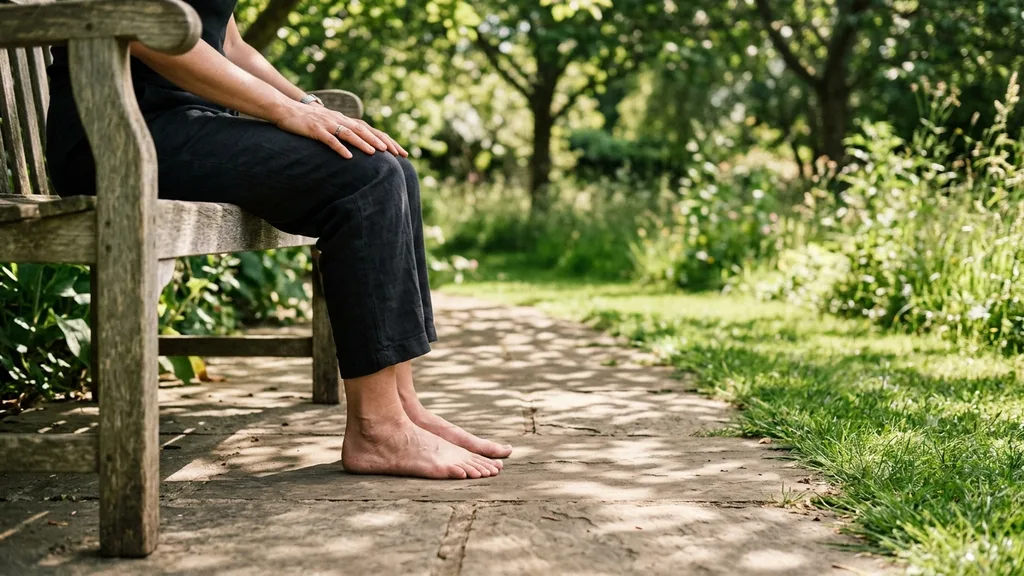
Your chest is tight, your jaw is set, and you have already told yourself three times that there is nothing to be anxious about. It has not helped, because the part of you that is anxious does not process arguments.
Somatic exercises skip the argument. They work on the body directly — on breath, muscle, posture, sound and attention — on the reasonable theory that if the body is behaving as though the danger has passed, the rest of you tends to follow.
Below are seven, none of which are the ones you have already read about ten times. One of them is the fastest-acting on this list and almost everybody skips it, because doing it in front of another person is mildly humiliating. I will come to it.
Key takeaways
- Somatic exercises work on the body first and let the mind catch up.
- A longer out-breath than in-breath is the mechanism behind most of them.
- Practise them when calm. A technique first met during panic rarely works during panic.
- If an exercise makes you feel worse, stop. That is information, not failure.
- None of this is treatment for an anxiety disorder, and it is not meant to be.
What Are Somatic Exercises?
Somatic exercises are simple physical practices that change how your body is behaving in order to change how you feel. Instead of examining anxious thoughts, they use breath, muscular movement, sound, touch and where you point your attention. The aim is to signal to the body that it can stand down, rather than to talk yourself out of anything.
The common thread across almost all of them is the out-breath. Breathing out slowly, for longer than you breathe in, is the most reliable lever anyone has for shifting the body from alert to settled — which is why so many techniques that look unrelated turn out to be long exhales wearing different clothes.
Before You Start
Three things worth saying plainly, because most articles on this topic leave them out.
This is not treatment. These are self-regulation practices, not therapy, and not a substitute for it. If anxiety is interfering with your work, sleep, relationships or ability to leave the house, that is worth taking to a professional. Nothing on this page replaces that conversation.
Body-based work can bring things up. Turning attention inward, slowing down and softening the jaw or belly can let feelings surface that were being held down by tension. Usually that is mild and passes. Occasionally it is not. If an exercise leaves you more agitated, tearful or dissociated than when you began, stop, open your eyes, look around the room, and do something ordinary and physical instead. That reaction is common enough that it deserves naming, and it is a reason to work with a therapist rather than to push on alone.
Practise them when nothing is wrong. A technique you first attempt in the middle of a panic response is a technique you are trying to learn while your brain is least able to learn anything. Run through these on ordinary Tuesdays. Then they are available on the bad days.
Seven Somatic Exercises
1. Orienting
Let your eyes move slowly around the room. Not scanning for anything — just letting your gaze land wherever it wants and stay a second or two. Turn your head as you go, so your neck moves too. Take thirty to sixty seconds.
Anxiety narrows vision and stiffens the neck; the body holds itself as though something needs watching. Deliberately looking around, slowly, with a moving head, is the posture of an animal that has decided nothing is coming. Many people notice a spontaneous sigh or a swallow partway through. That is the shift, and it is worth waiting for.
2. The double breath
Breathe in through the nose, and then — without breathing out — take a second, shorter sip of air on top of it. Then let a long, slow breath out through the mouth. Repeat two or three times, no more.
It is the shape of a sob or a sigh, which is not a coincidence: it is what the body does by itself when it has been holding tension. Doing it deliberately is the quickest of these to take effect, usually within a few breaths.
3. The self-hold
One hand flat on your chest, the other flat on your belly. Let both hands be heavy. Do not try to breathe in any particular way — just feel the weight and warmth of your own hands and let the breath do what it does underneath them.
Sustained, firm contact is calming in a way light touch is not, and being able to feel the outline of your own body is steadying when anxiety has made everything feel unmoored. Two minutes is plenty. If lying down suits you better, this works well there too, and it pairs naturally with a body scan meditation if you want to carry on.
4. Humming
Breathe in normally and hum the out-breath. Low, quiet, unmusical, until the air runs out. Five or six of them.
Humming does two things at once: it forces a long, slow exhale, and it produces a vibration you can feel in your face, throat and chest. That vibration gives the attention somewhere concrete to sit, which is useful when thoughts are moving too fast to follow.
5. Shaking
Stand with your feet hip width. Let your knees bounce loosely so the movement travels up through your legs, hips, torso, shoulders and arms. Let your hands flop. Thirty seconds to a minute, then stop and stand completely still and notice what is happening in your body.
Look ridiculous while doing it. This is the one.
6. Feet and weight
Sit down and put both feet flat on the floor. Press them down — not hard, just enough to feel your weight going into the ground — and hold for five seconds. Release. Repeat four or five times. Then sit still and feel the chair holding you up.
Anxiety lifts attention upward, into the head and the future. Pressing down and feeling contact is the plainest available way to bring it back to something physical and present. A heavy blanket over the legs does the same job passively.
7. Jaw and tongue
Let your teeth come slightly apart. Let your tongue rest low and wide in your mouth instead of pressed against the roof. Then let your lower jaw feel heavy, as though it wants to hang.
The jaw is where a large amount of held tension quietly lives, and unlike the shoulders it is almost never noticed. It is also directly connected to the muscles of the throat and the breath, so a slack jaw makes a slow exhale considerably easier. This one is invisible and can be done in a meeting.
The One Everyone Skips
Shaking.
It is the fastest-acting exercise on the list and the one nearly everybody leaves out, because it is undignified. There is no way to shake loosely for a minute and retain your composure, which is precisely why it works — composure is what you are holding, and it takes muscular effort to hold.
The logic is straightforward. A stress response prepares muscles for action that then does not happen; you sit in a chair and feel it as tension instead. Shaking gives that preparation somewhere to go. Animals do it visibly after a near miss. So do people, after a car swerves — the hands shake, and then they stop, and then you feel better.
The important part is the stopping. Shake for thirty to sixty seconds, then stand completely still and pay attention. What most people notice is a wave of warmth or tingling, a deeper breath arriving unbidden, and the shoulders sitting lower than before. That pause is the exercise. The shaking is only how you get there.
Do it somewhere private and the dignity problem disappears entirely.
How Often, and For How Long
Two minutes, twice a day, on days when nothing is wrong. That is genuinely the whole prescription.
The point of regular practice is not the two minutes. It is that a technique needs to be boringly familiar before it is available in a difficult moment. Something you have done sixty times when calm will still be there when you are not; something you read about once will not.
Pick two of the seven rather than all of them. Orienting and the double breath are the most generally useful pair. Attach them to something you already do — sitting down at your desk, waiting for the kettle — rather than scheduling them, because scheduled two-minute practices are the first thing to disappear from a bad week.
What Gets Hard, and What to Do About It
You feel more anxious, not less
This happens, particularly with the exercises that ask you to turn attention inward and be still. For some people, a quiet body is where anxiety becomes audible. Stop the exercise and switch to one that faces outward — orienting, or pressing your feet into the floor — rather than one that faces inward. If it happens consistently, that pattern is worth discussing with a therapist.
Nothing happens at all
Usually one of two things. Either you did it for twenty seconds rather than a minute, or you were waiting for a dramatic sensation. The change is typically small: a slightly deeper breath, shoulders a centimetre lower, the noticing that your jaw had been clenched. Small is what it is supposed to be.
You get light-headed
Almost always over-breathing — taking in too much air rather than breathing too slowly. Make the in-breath smaller and quieter, and let the out-breath be the long part. A calming breath should be barely noticeable to anyone watching.
You feel silly
Reasonable, and largely unavoidable for the humming and the shaking. Do those two alone, behind a closed door. The other five are invisible.
You forget them exactly when you need them
The most common failure by far, and it is a practice problem rather than a memory problem. See the section above: familiar first, useful second. It also helps to have one exercise you have decided is the one, so there is no choosing to do in a moment when choosing is hard.
It works, but only for ten minutes
That is a normal and reasonable result. These are not solutions to a difficult situation; they lower the volume enough to think. If the anxiety returns because the thing causing it is still there, the exercise did its job and the situation still needs addressing.
What to Expect
First few times: mild, occasionally nothing. A sigh, a swallow, a slightly looser jaw. Note what you notice, because it is easy to miss.
After a week or two: the effect arrives faster, because your body starts to recognise the shape of the exercise. This is the main reason to repeat the same two rather than rotating through all seven.
After a month: most people report noticing tension earlier — catching a raised shoulder or a held breath before it has become a bad afternoon. That earlier noticing is worth more than any single technique.
If you want to go further, the slow-exhale techniques in our breathing exercises guide use the same mechanism deliberately, the 5-4-3-2-1 grounding technique is the sensory version of orienting, and the progressive muscle relaxation script is the long-form version of the tension-and-release idea behind shaking. For anxiety that has arrived through sustained overwork rather than a specific trigger, meditation for burnout is the more relevant starting point.
If the anxiety is loudest in the hour after you wake, the sequencing matters as much as the exercises — our guide to morning anxiety sets out what to do minute by minute.
If the body goes numb or distant rather than tense, that is a different state — how to stop dissociating covers it.
A quick grounding prompt: name three things you can see, three sounds you can hear, then move three parts of your body. It works on the same principle as orienting — pulling attention out of anxious thought and into present sensory information. Useful, though a slow, deliberate look around the room tends to work better.
Around two minutes, twice a day, ideally on days when you feel fine. Regular practice when calm is what makes a technique available during a difficult moment. Choose two exercises and repeat those rather than rotating through many — familiarity matters more than variety.
Occasionally, yes. Stillness and inward attention can make anxiety more noticeable, and body-based work sometimes lets held feelings surface. If an exercise leaves you more agitated or detached, stop and switch to an outward-facing one such as looking slowly around the room. Persistent reactions are worth raising with a therapist.
Lengthening the exhale relative to the inhale shifts the body away from its alert state and towards its resting one. It is the mechanism underneath most calming techniques, which is why humming, sighing and slow breathing all produce a similar effect despite looking quite different.
No. They are self-regulation practices that can make a difficult moment more manageable. They are not therapy and not a replacement for it. If anxiety is affecting your sleep, work or relationships, speak to a professional — these practices can sit alongside that, not instead of it.
Pick Two
Not seven. Two. Do them on days when you feel fine, for two minutes, until they are thoroughly unremarkable.
And do the shaking one at least once, alone, with the door shut. It is the most effective thing on this page and the least likely to be tried.
More practices in the same vein sit in our stress and anxiety relief collection.
Keep reading
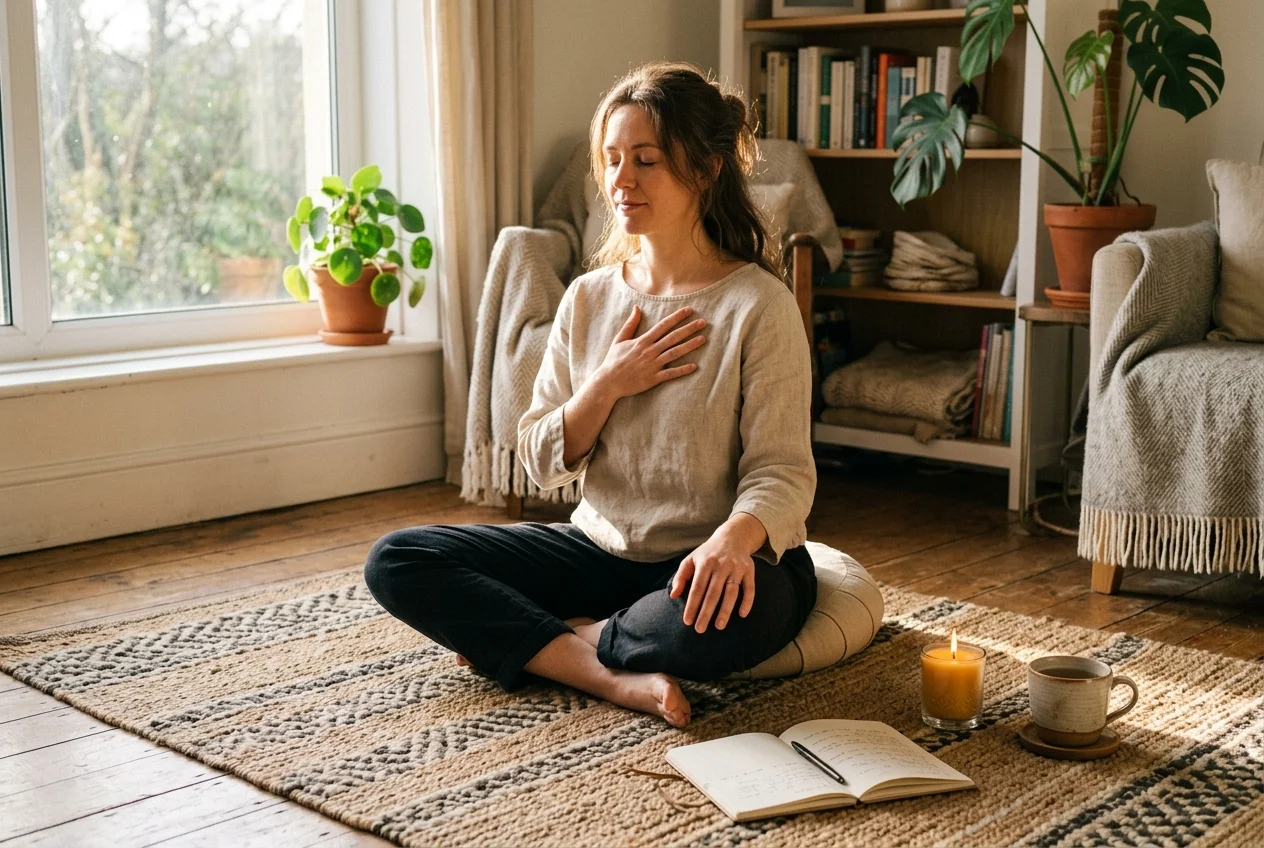
The 5-4-3-2-1 Grounding Technique (Done Properly)
The pacing mistake that makes it useless, what to do when you cannot smell anything, and how to adapt it at 3am.
Breathing Exercises for Anxiety: 6 Techniques That Work
Six techniques, when to use each one, and the common mistake that makes people feel worse instead of calmer.
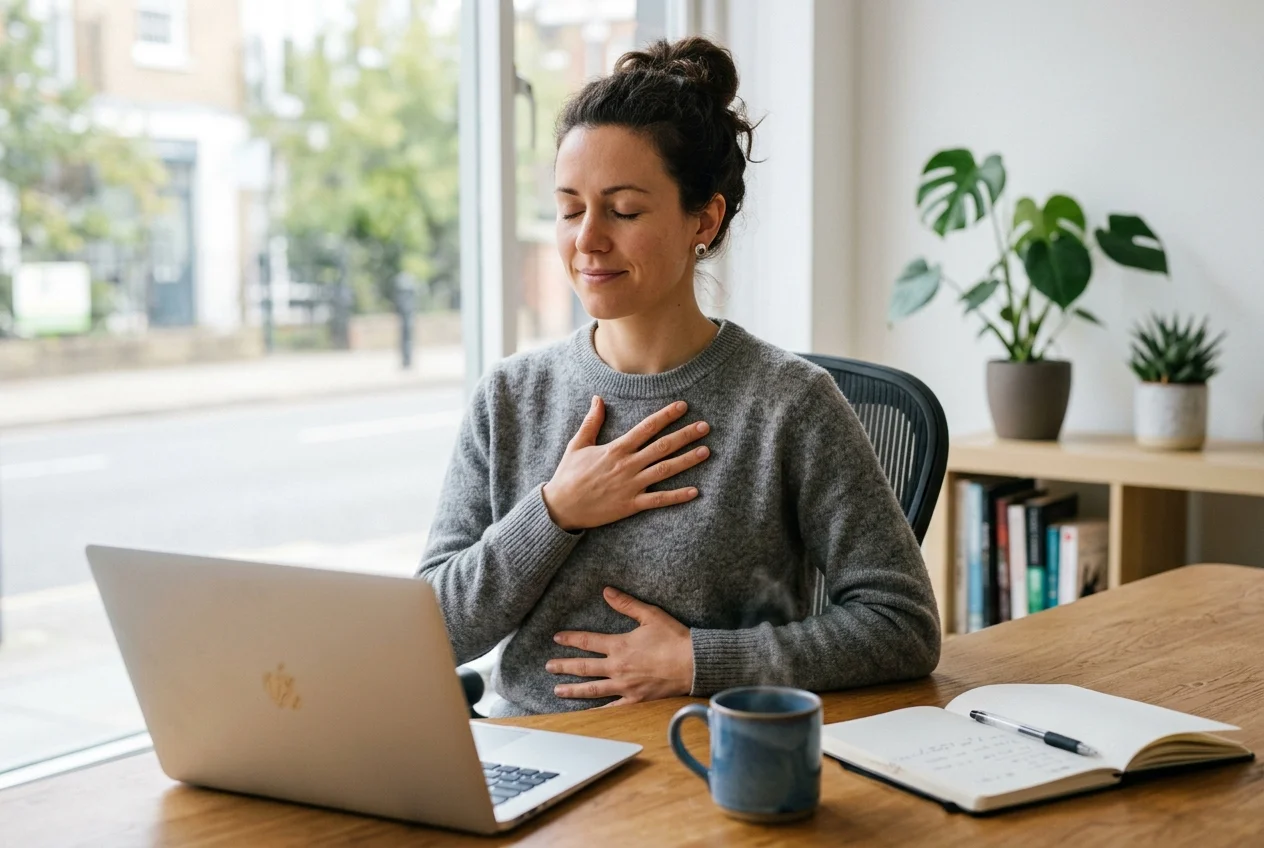
Meditation for Burnout: What Helps When You Are Empty
Meditation adapted for burnout rather than stress: five short practices that work when you are flat, and the honest limit of what they can fix.