Candle Meditation: The Half of Trataka Nobody Teaches
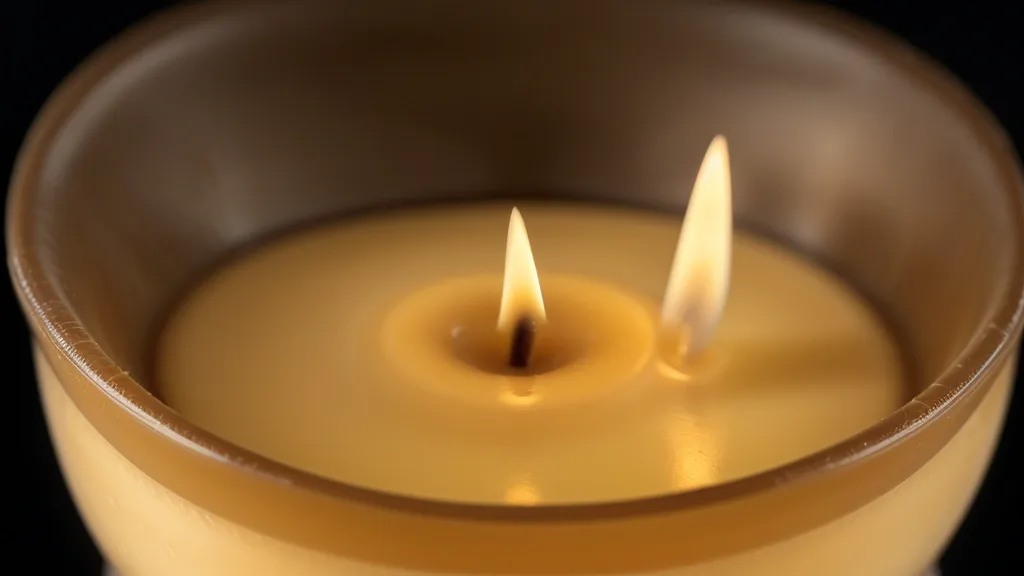
You light a candle, sit down, stare at it, and after ninety seconds your eyes are streaming and you are not sure whether that means it is working or that you are doing something unwise to your corneas.
Candle meditation — trataka, in the yogic tradition it comes from — is one of the easiest practices to start and one of the most commonly half-taught. Nearly every guide tells you to gaze at the flame and stops there. But gazing at the flame is only the first half of the practice. The second half happens with your eyes closed, and it is the part that actually does the work.
This guide covers both halves, plus the thing nobody mentions: how long is sensible to stare at a flame, and what the watering eyes are really telling you.
Key takeaways
- The practice has two phases: open-eyed gazing, then closed-eyed attention to the afterimage.
- Blinking is allowed. The instruction not to blink is where most people go wrong.
- Start at one minute of gazing, not ten.
- Watering eyes mean you have gazed long enough for now, not that you are succeeding.
- It suits people who find eyes-closed meditation impossible, because there is something to look at.
What Is Candle Meditation?
Candle meditation is a concentration practice in which you rest your gaze on a candle flame, then close your eyes and hold your attention on the afterimage that remains until it fades. Gazing and afterimage together form one round, repeated a few times. The traditional name is trataka, and the point is to give a restless attention a single, undemanding object.
It belongs to the same family as our focus meditation practices: one object, returned to whenever attention leaves. The candle simply makes the object visible, which is why beginners often find it far easier than watching the breath — a flame is genuinely there, and you can tell instantly whether you are looking at it.
Setting Up
- Put the flame at eye level, roughly an arm's length away. On a low table if you sit on the floor, or a stack of books on a desk. Looking down at a candle strains the neck; looking up at one strains the eyes.
- Dim the room, but do not black it out. Total darkness makes the contrast harsh and the eyes tire faster.
- Kill the draught. A flickering flame is a moving object, and following movement is a different and more tiring task than resting on something still. Close the window, move away from the vent.
- Use a plain candle. Unscented, no glass jar between you and the flame. A jar makes you look through a reflection rather than at the flame.
- Sit so you can stay still. Upright and comfortable — if that is the difficulty, our guide to meditation posture deals with it.
The Practice, Both Halves
One round takes two to three minutes. Do three rounds to begin with.
- Settle for thirty seconds. Eyes closed, a few slow out-breaths, letting the body arrive.
- Open your eyes and rest them on the flame. Not the whole candle — the flame, and ideally the small dark point just above the wick where the flame is steadiest.
- Blink normally. This matters, and contradicts a lot of what you will read. Blinking does not break the practice; drying your eyes out ends it.
- Gaze for about one minute. Soft eyes, not a stare. If your eyes water or begin to sting, that is the end of this round's gazing — close them.
- Close your eyes and find the afterimage. A shape will be floating there, often a different colour from the flame. Rest your attention on it and stay with it.
- Follow it until it goes. It will drift, fade, change colour and reappear faintly. Keep watching without chasing it. When it has gone entirely, the round is over.
- Repeat. Three rounds is a complete session, around eight minutes with the settling.
Step five is the practice. The gazing loads the object; the closed-eyed half is where you actually train concentration, because the afterimage is faint, unstable and will not hold still — which means holding attention on it demands something. That is the half almost every guide omits, and skipping it turns trataka into staring at a candle.
About Your Eyes
Worth being straightforward here, since this is the one meditation practice that involves doing something slightly unusual to a sense organ.
The watering is dryness, not release. Some traditional sources treat streaming eyes as a cleansing effect to be pursued. In practice, holding your eyes open without blinking simply lets the tear film evaporate; the eye then floods to compensate. That is irritation, not progress. It is a signal to close your eyes, which is convenient, because closing your eyes is the next step anyway.
Blink whenever you want to. The afterimage forms perfectly well with normal blinking. Suppressing blinks buys you nothing and makes the session unpleasant enough that you will not repeat it.
Keep the gazing short. A minute per round is plenty, and three rounds is a full session. Extending to ten unbroken minutes is not a more advanced version of the practice; it is the same practice with sore eyes.
Some people should skip it. If you have an eye condition, are recovering from eye surgery, get migraines with visual aura, or have a seizure disorder that light can provoke, this is not the practice to experiment with — and a steady flame is safer than any flickering screen-based version. There are plenty of other concentration objects; the flame is not special.
Why the Afterimage Works So Well
Worth understanding, because it explains why the second half is the useful half.
When you look steadily at something bright, the cells in your retina responding to it become temporarily less sensitive. Close your eyes and that patch of reduced sensitivity is still there, so you see a shape where the flame was — usually in a complementary colour, which is why a warm orange flame often leaves a cool blue-green mark behind.
There is nothing mystical in that, and knowing the mechanism does not spoil the practice. What matters is the behaviour of the thing: the afterimage is faint, drifts when you try to look straight at it, dissolves and reforms, and disappears entirely if you get distracted for a few seconds. It is an object that requires attention in order to remain visible at all.
That is an unusually honest training aid. With the breath you can convince yourself you are paying attention while quietly planning dinner. With the afterimage you cannot — it simply goes, and its absence tells you exactly what happened. The practice keeps score for you.
When a Candle Is Not Practical
A real flame is the best object, but it is not always available — a shared room, a smoke alarm, a hotel, a small child. Any of these work on the same principle.
- A dot on the wall. A coin-sized black circle on paper, at eye level, an arm's length away. No afterimage phase worth speaking of, so extend the open-eyed gazing to two or three minutes and close your eyes on the memory of it instead.
- A single small object. A stone, a shell, a flower. Choose something with little detail — a busy object invites inspection rather than resting.
- A flameless candle. Fine, provided it is steady. Avoid the ones that imitate flicker; a moving light is a moving target and defeats the purpose.
- Not a screen. Phones and laptops adjust their own brightness, emit at a different intensity, and come attached to everything else you might do with them. This is a practice about resting attention, and a screen is the object least likely to allow it.
Whatever you choose, keep it the same each time. Part of what settles you is the recognition — the same object in the same place tells the body what is about to happen, which is the same reason it helps to sit in one spot. On session length, our guide to how long should you meditate applies here too: three short rounds beat one long one.
What Gets Hard, and What to Do About It
Nothing happened and you are not sure you did it right
The most common reaction, and usually it means the second half was cut short. People close their eyes, see a faint blob for two seconds, decide that was not it, and open their eyes again. Stay closed for longer than feels reasonable. The afterimage often fades, then returns, then fades again — and the return is the interesting part.
Your eyes sting after thirty seconds
You are not blinking, almost certainly because you read that you should not. Blink. Also check the room is not too dark and the flame is not moving.
The afterimage disappears immediately
Usually too little contrast — the room too bright, or the flame too far away. Dim the lights a little and bring the candle closer. Failing that, gaze for slightly longer before closing your eyes.
Your mind wanders as much as ever
Then the practice is working as designed. Trataka does not stop the mind wandering; it makes wandering obvious, because the moment you leave the flame you notice you are no longer looking at it. Notice, return, repeat. The returns are the exercise.
It feels uncomfortably intense
Sustained gazing in a dim room can feel strange, and for some people it stirs things up rather than settling them. If a session leaves you more agitated than when you began, stop, turn the lights up and do something ordinary. There is no obligation to persist with this particular object.
You keep forgetting to do it
Attach it to lighting the candle you already light in the evening rather than adding a new event. It sits naturally at the front of an evening meditation routine, where the dim room is already the point.
What to Expect
First session: mostly curiosity about the afterimage, which is a genuinely odd thing to watch. Expect to be more interested in the optics than in the concentration. That is fine.
First week: the closed-eyed half gets easier to stay with, and the wandering becomes obvious rather than invisible. This is the real beginning.
Weeks two to four: the gazing steadies and the sessions stop feeling like an eye exercise. Many people find their attention holds better in other practices too, which is the transferable part.
Longer term: most people use it occasionally rather than daily — on evenings when sitting with the breath feels impossible and having something to look at is the difference between practising and not. That is a perfectly good use of it. If you find looking at a fixed object suits you, mirror gazing works on the same principle with a considerably more confronting object.
It trains concentration by giving attention a single visible object, then a fading afterimage to hold once your eyes are closed. Because you can see immediately whether you are still with the flame, wandering becomes obvious — which is what makes it easier for beginners than watching the breath.
Place the flame at eye level about an arm's length away in a dimly lit, draught-free room. Gaze softly at it for around a minute, blinking normally, then close your eyes and rest your attention on the afterimage until it fades completely. That is one round; three rounds makes a session of roughly eight minutes.
Yes. The common instruction to avoid blinking causes the tear film to dry out, which makes the eyes sting and flood. Blinking normally does not prevent the afterimage forming and makes the practice sustainable. If your eyes water, treat it as the cue to close them and move to the second half.
About a minute per round, and stop sooner if your eyes sting or water. Three rounds is a complete session. Longer unbroken gazing is not a more advanced version of the practice — it just makes your eyes uncomfortable without improving concentration.
Trataka is the yogic name for steady gazing at a single point, most often a candle flame. It is traditionally practised in two phases — gazing with the eyes open, then holding attention on the internal afterimage with the eyes closed. Most modern guides describe only the first phase.
Do the Second Half
If you take one thing from this: the candle is not the practice. The candle is how you load the practice, and the practice happens behind your closed eyelids for the ninety seconds afterwards.
Light one this evening, gaze for a minute, close your eyes, and stay with whatever is floating there until it has completely gone. That is the whole thing.
More practices of this kind sit in our meditation techniques collection.
Keep reading

Complete Guide to Focus Meditation
In a world of constant distractions, where notifications pull us in a dozen different directions before breakfast,…
Mirror Gazing: Benefits, Techniques & How to Practice It
Mirror Gazing: Benefits, Techniques & How to Practice It Mirror gazing is the practice of looking steadily into your…

Evening Meditation: How to Wind Down and Sleep Better
A practical evening routine: seven steps, how long to sit, what to do when your mind speeds up, and how to keep it going on a bad week.